


Hotel Guesthouse Apartment in Ayutthaya
Hotel,Guest house,Apartment in Ayutthaya
For rent


Ayothaya Hotel
Contact. 035-232855
The Lima Place Ayutthaya
Contact. 035-801808
Krung Sri Liver Hotel
Contact. 035-243777
Recommended OTOP (One tumbol One Product) Ayutthaya
OTOP (One tumbol One Product)
Ayutthaya

Product : NUMPRIK KRUATHAI
Contact : 035-335723

Product : Pla Ta Pean Bai Lan
Contact : 035-211608
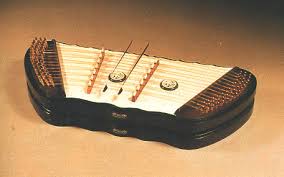
Product : Khim Sai
Contact : 035-336541
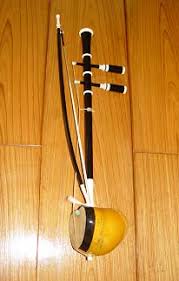
Product : Sor Uo
Contact : 035-336541
And Many Product in Ayutthaya
Don't forget
"Travel in Ayutthaya"
Wat Phra Sri Sanphet Ayutthaya

Wat Phra Sri Sanphet
This imprtant and most outstanding monastery is located in Grand Palace compound like Wat Phra Sri Sanphet Ratanasatsadaram (Wat Phra Kaeo) of Bandkok. Used as residential palace, it became amonaster in the reign of King Ramathibodi I. When King Borom Trai Lokanat commanded new living quarters built, this residential palace was given to be a temple area, thus originating Wat Phra Sri Sanphet : The royal chapel does not have any monks and novice inhabitants.
About Muang Phra Nakhon Sri Ayutthaya
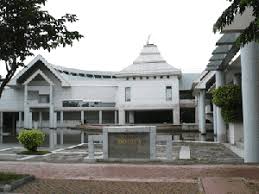
Ayutthaya Historical Study Centre Located on Rojana Road, this centre is a national research institute devoted to the study of Ayutthaya, especially during the period when it was the capital of Thailand. The Centre is responsible for the museum of the history of Ayutthaya, which exhibits reconstructions from the past. The Centre also supports and information service and a library containing historical material about Ayutthaya.
Information : The Centre is open everyday from 09.00-16.30 hrs.,official holidays from 09.00-17.00 For more details please contact Tel.0-3524-5124 (Admission fee : 100 Baht)

Chao Sam Phraya National Museum This is on Rojana road, opposite the city wall. It houses various antique bronze Buddha images and famous carved panels. A receptacle at the Thai Pavillion contains relics of Lord Buddha and objects of art more that 500 years old. The museum also has a substantial collection of local artifacts.
The museum is open everyday except Monday, Tuesday, and national holidays from 09.00-16.00 hrs. (Admission fee : 10 Baht). For more information Tel.0-3524-1587

Khum Khun Phaen (Khun Phaen House)
Khun Phaen 's Thai - style house conforms to descriptions in a popular Thai literay work. Khun Phaen's house is near Wihan Phra Mongkhon Bophit.
Fort And Fortress Around The City. The forts along the city wall and outer circle fortresses as found in the historical records include Pom Mahachai, Pom Phet, Pom Ho Ratchakhru, Pom Chidkop, Pom Champaphon, Pom Yai, etc. They are mostly situated at waterway intersectons.
Description of Bangpain Palace Ayutthaya
Bangpain Palace. This Palace is located in Tambon Bang Len. Amphoe BangThgpain. 18 kilometres south of Ayutthaya. It lies 58 kilometres north of Bangkok by rail. 61 kilometres by road. To access to Bangpain from Ayutthaya, one can go by Phahonyothin Road and make a right turn at Km.35 for another distance of 7 kilometres to Bangpain Palace. The palace is open to the public everyday from 08.30-16.00 hrs. Admission fee is 50 baht per person
Originally, Bangpain was a riverrine island. When Prasat Thong became the Ayutthaya king (1630-1655), he had the Chumphon Nikayaram Temple built on his family estate. Later, he had a palace built on a lake in the middle of the island where he could periodically reside.
The palace, surrounded by a lake 400 metres long and 40 metres wide, and the Chumphon Nikayaram Temple, are all that remain of King Prasat Thong's construction work at Bangpain.
Bangpain was used as a country residence by every Ayutthayan monarch after King Prasat Thong. But when the new capital was established in Bangkok. Bangpain ceased to be used and was left unoccupied for 80 years. It was only during King Mongkut's reign (1851-1868) that Bangpain was again visited by kings. King Mongkut stayed there and had a house built in the old palace's compound.
His son, King Chulalongkorn (1868-1910) liked the palace, stayed there every year and constructed the royal palace as it is now seen today. Important buildings inside the palace compound are:


Phra Thinang Utthayan Phumisathian is a two-storey building located to the east and opposite the pond. It is a piece of elabrate work seen tinted alternately with dark and light greens. Its balcony is similar in design to a Swiss chalet.
 Ho Hemmonthian Thewarat is the stone Prang under a banyan tree near the pond within the outer part of the royal compound, where an image of a deity is housed. King Rama V ordered its construction in 1879 to replace an old shrine built by villagers as an oferng to King Prasatthong of the Ayutthaya period.
 Saphakhan Ratchaprayun This two-storeyed building on the river bank outside the palace wall was constructed by the royal command of King Rama V. It is in front of Warophat Phiman Hall in the south and was used as the living quarter of tehe non-consort member.
 Witthunthassna Hall This hall, constructed in the form of a tower between Utthayan Phumisathian and Wehat Chamrun, is a three-storey building having a spiral staircase leading to the top floor hall. When residing in Bangpain Palace, ing Rama V used this hall as the place to get the bird's eye view of the surrounding area.

 Wihat Chamrun Hall This hall located in the north of the palace, was constructed in the Chinese Emperor style as the royal offering by Phraya Choduk Ratchasetthi (Fak). King Chulachomklao usually made a royal visit during the cool season.
 Monument Of Queen Sunantha This is a 3 metre high hexagonal marble building, situated on the east side of the royal palace. It was constructed to keep the ashed of hte affectionate consort of King Rama V (Somdet Phranangchao Sunantha Kumarirat).
 Wat Niwet Thamprawat is the monastrey located to the south of an island in the Chao Phraya River, on the riverbank opposite the royal palace. In 1878, King Rama V ordered its construction to have the same architectural style of a Western cathedrl. The building and its decorations are of Gothic style and beautified with colourful stained glass. The base : where the principal image of Buddha and his followers were placed, was designed to resemble the one for the Cross in a Christian church, not a traditional Chukkachi base as seen in general.
Originally, Bangpain was a riverrine island. When Prasat Thong became the Ayutthaya king (1630-1655), he had the Chumphon Nikayaram Temple built on his family estate. Later, he had a palace built on a lake in the middle of the island where he could periodically reside.
The palace, surrounded by a lake 400 metres long and 40 metres wide, and the Chumphon Nikayaram Temple, are all that remain of King Prasat Thong's construction work at Bangpain.
Bangpain was used as a country residence by every Ayutthayan monarch after King Prasat Thong. But when the new capital was established in Bangkok. Bangpain ceased to be used and was left unoccupied for 80 years. It was only during King Mongkut's reign (1851-1868) that Bangpain was again visited by kings. King Mongkut stayed there and had a house built in the old palace's compound.
His son, King Chulalongkorn (1868-1910) liked the palace, stayed there every year and constructed the royal palace as it is now seen today. Important buildings inside the palace compound are:
Aisawanthipphaya-At Pavilion

Warophatphiman Hall
It is north of the "Saphan Sadet" the royyal path to and from the river landing. Formerly
the two-storey wooden villa was used as both the royal living quarters and Throne Hall, Later during his reign, King Rama V commanded the original one to be demolished and replaced with a European design building to be used as the Throne Hall to receive his subjects for royal ceremonies. In this hall are paintings of the royal historic records, Inao literature, Phra Aphai Mani literature and the Ramayana epic.
Phra Thinang Utthayan Phumisathian is a two-storey building located to the east and opposite the pond. It is a piece of elabrate work seen tinted alternately with dark and light greens. Its balcony is similar in design to a Swiss chalet.
Before being destroyed by fire during the restoration in 1938, the whole building was built from wood and decorated inside with mahogany furniture ordered directly from Europe. Other decorative items were precious offering rarely to be found, but forwarded to the capital from satellie towns. A beautiful flower garden surrounded the building.
Now, a concrete structure of the same, model has been built to replace the one that was burnt.
Theatre This theatre was constructed by the royal command of King Rama VI in the compound of his consort's living quarters near the pond in the garden west of Utthayan Phumisathian Hall.
 Ho Hemmonthian Thewarat is the stone Prang under a banyan tree near the pond within the outer part of the royal compound, where an image of a deity is housed. King Rama V ordered its construction in 1879 to replace an old shrine built by villagers as an oferng to King Prasatthong of the Ayutthaya period.
 Saphakhan Ratchaprayun This two-storeyed building on the river bank outside the palace wall was constructed by the royal command of King Rama V. It is in front of Warophat Phiman Hall in the south and was used as the living quarter of tehe non-consort member.
 Witthunthassna Hall This hall, constructed in the form of a tower between Utthayan Phumisathian and Wehat Chamrun, is a three-storey building having a spiral staircase leading to the top floor hall. When residing in Bangpain Palace, ing Rama V used this hall as the place to get the bird's eye view of the surrounding area.
Keng Buppha Praphat is the Chinese style pavilion nearby the garden's pond within the inner part of the royal compound. It was buile n 1881 during the reign of King Ram V.
 Wihat Chamrun Hall This hall located in the north of the palace, was constructed in the Chinese Emperor style as the royal offering by Phraya Choduk Ratchasetthi (Fak). King Chulachomklao usually made a royal visit during the cool season.
 Monument Of Queen Sunantha This is a 3 metre high hexagonal marble building, situated on the east side of the royal palace. It was constructed to keep the ashed of hte affectionate consort of King Rama V (Somdet Phranangchao Sunantha Kumarirat).
 Monument Of Phra-Akkharachayathoe Phra-Ong Chao Saowaphak Narirat and Three Royal Children, or Anusawari Rachanuson. It is the marble relif memorial that King Rama V, with his deep sorrow, ordered to be constructed in 1888 to commemorate his beloved consort (Phra-Akkharachayathoe Phr-Ongchao Saowaphak Narirat) and three royal children who passed away at different times of the same year, 1887. These portraits stand nearby the memorial of Somdet Phranangchao Sunantha Kumarirat.
 Wat Niwet Thamprawat is the monastrey located to the south of an island in the Chao Phraya River, on the riverbank opposite the royal palace. In 1878, King Rama V ordered its construction to have the same architectural style of a Western cathedrl. The building and its decorations are of Gothic style and beautified with colourful stained glass. The base : where the principal image of Buddha and his followers were placed, was designed to resemble the one for the Cross in a Christian church, not a traditional Chukkachi base as seen in general.
 The window blocks were especially made for curved wndows. On the Ubosot wall in front of the principal Buddha image, there is a picture of King Rama V created with stained glass. Situated to the right of the Ubosot is Ho Phra Khanthararat, a shrine where Phra Khanthararat - a Buddha image in the posture of requesting rain, is put for worship. Opposite Ho Phra Khanthararat is another shrine, which is the house of a seated stone Buddha image protected by a seven-headed naga. It is an ancient Buddha image aged a thousand years, built in the Lopburi period by a khmer craftsman.
This venerated Buddha image is very close to the big banyan tree that spreads its branches to shade the area in front of the Ubosot. Not far from the Ubosot, there is a cluster of stones naturally found in Thailand, which contains the relics of Chaochommanda Chum, a consort of King Rama IV and mother of Prince (Somdet Kromphraya) Damrong Rajanubhab and the members of the 'Diskul' family. From Bangpain Palace, visitors can access the monastery through a cable car that carries 6-8 passengers at a time. The fare depends on the passenger's contributions.
Wat Yai Chaimongkhon Ayutthaya

Wat Yai Chaimongkhon
The largest chedi in Ayutthaya is located at Wat Yai Chaimongkhon, located outside the city island to te southeast. King Naresuan the Great commissioned the pagoda to be built to celebrate his victory over the Burmese in 1593. On the northeast side of the wat is a large reclining Buddha housed within a ruined wiharn.
Wat Na Phramen Ayutthaya

Wat Na Phramen
Wat Na Phramen is the only temple that was not completely destroyed during the 1767 invasion and destruction of Ayutthaya, Situated on the northern side of the city moat right across from the Grand Palace, the Burmese used the temple as their headquarter. Still in use today, it has retained its original,magnificent splendor since its construction in 1503.
The Ayutthaya Historical Study
The Ayutthaya Historical Study Center
The Ayutthaya Historical Study Center houses interesting audio-visual displays depiction Ayutthaya's history. Funded by the Japanese government, the center is located in a former Japanese quarter at the time when Ayutthaya was at the peak of its power and prosperity.
Bang pa in Palace Ayutthaya

Bang pa in Palace
Located slightly south of Ayutthaya, Bangpain Palace was used as a country residence by the Ayutthayan royalties. When the capital was moved to bangkok, Rama V restored the palace compound, as it now appears with various distinctive buildings, such as tthe Chinese-style pavilion and the famous Thai pavilion in the middle of the pond.
Wat Chaiwatthanaram Ayutthaya
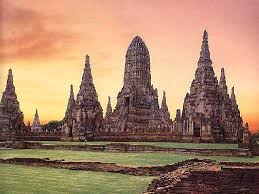
Wat Chaiwatthanaram
On the bank of the Chao Phraya River, on the western side of the city, is another beautiful monastery, Wat Chaiwatthanaram. The magnificent main stupa (tower) and the satellite stupas along the gallery reflect a Khmer influence.
The Chedi Phra Si Suriyothai Ayutthaya

The Chedi Phra Si Suriyothai
The Chedi Phra Si Suriyothai, located in the Phra Nakorn Sri Ayutthaya Historical Park, is a memorial dedicated to the first heroine in Thai history. It is an important proof that ancient. Thai society honored Thai women. In 1548 Phra Sri Suriyothai, a royal consort, went out to battle the Burmese with the Thai army. Clad in a warrior's suit, she fought on elephant back and sacrificed her life to save her husband, Phra Maha Chakkraphat, the present King from danger. The chedi is located at the original cremation site.
Wat Ratchaburana and Wat Mahathat Ayutthaya

Wat Ratchaburana & Wat Mahathat
Wat Ratchaburana is located opposite Wat Mahathat, located at the eastern entrance of the Grand Palace. Two pagodas were built on the ground where the king's 2 brothers were killed while engaged in single hand combat abreast elephants against the Burmese. Later, a sanctuary(Wiharn) was added and the placed was upgraded to a monastery (Wat).
The Elephant Kraal Pavilion (Pa-nead)
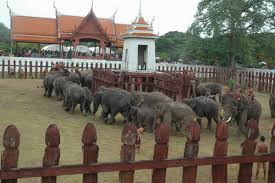
The Elephant Kraal Pavilion
(Panead kong chang)
The Elephant Kraal Pavilion, slightly north of town, was utilized as the royal seat to witness the elephant round-ups. Wild elephants would be driven here for training as pack animals or war mounts. In the middle of the stockade is a shrine to honor the elephant guardian.
Wat Phra Mongkhon Bophit Ayutthaya

Wiharn Phra Mongkhon Bophit
Ayutthaya
Adjacent to that and also located on the palace grounds is the Wiharn Phra Mongkon Bophit Ayutthaya (Wat Mongkhon Bophit),
presently housing a large bronze-cast Buddha image originally enshrined outside the Grand Palace to the east. The original sanctuary (Wiharn) and Buddha image was badly destroyed by fire during the second fall of Ayutthaya. Though beautiful, the renovated building paled in comparison to the beautiful craftmanship of the original ones. The open area to the east of the senctuary was formerly the Royal Fields (Sanam Luang), but has now been converted into a parking lot and souvenir vending stalls.
Wat Phra Sri Sanphet Ayutthaya

TOURISM AND FESTIVAL
PHRANAKHON SRI AYUTTHAYA
It was common for a royal temple to be included in the Grand Palace, reserved for royalties only. The important and most outstanding monastery located in the Grand Palace of Ayutthaya is Wat Phra Sri Sanphet. Formerly a residential palace, it was later used as a royal chapel, but no monks or novice have ever inhabited this place. as the normal practice of other temples.
Subscribe to:
Posts (Atom)